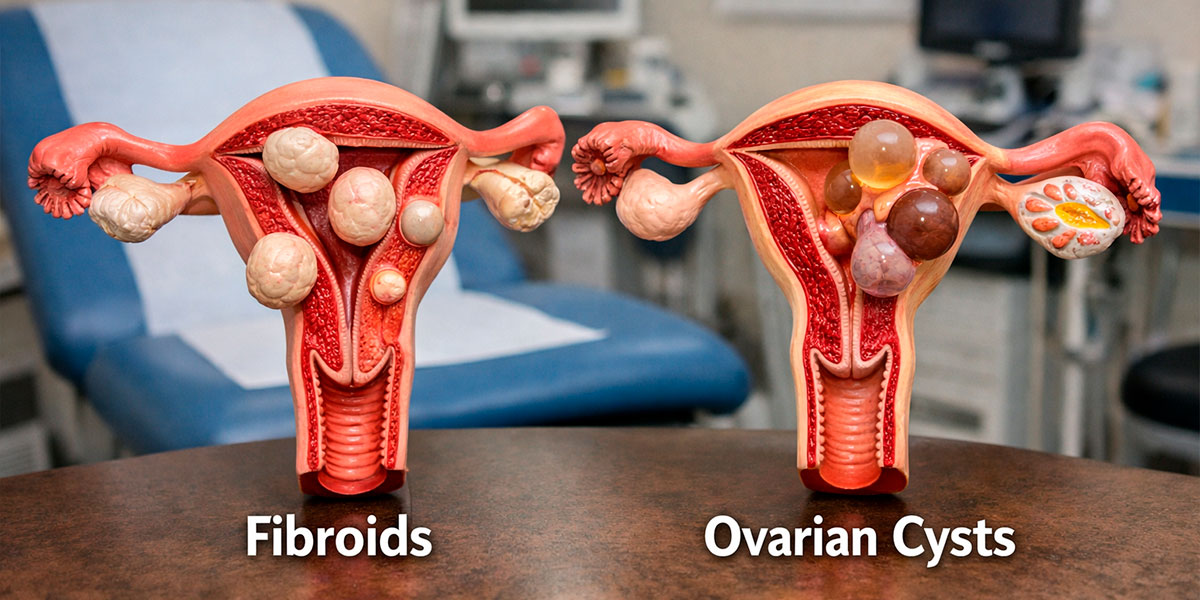
Uterine fibroids and ovarian cysts are common gynaecological conditions that can affect menstrual health, pelvic comfort, and reproductive well-being. While many cases do not require surgery, some may cause symptoms such as heavy menstrual bleeding, abdominal discomfort, pelvic pressure, or changes in menstrual cycles. Early evaluation helps identify the cause of symptoms and determine the most appropriate treatment.
At Precision Medical Centre, Noida, Dr. Sangeeta Sharma, Director and Senior Consultant in Obstetrics, Gynaecology and Laparoscopic Surgery, provides personalised evaluation and management guidance for uterine fibroids, ovarian cysts, and related gynaecological concerns.
Uterine fibroids are non-cancerous growths that develop in or around the muscular wall of the uterus. They vary in size and location, and some women may not experience any symptoms.
Common symptoms of uterine fibroids include:
The impact of fibroids depends on their size, number, and location within the uterus.
Ovarian cysts are fluid-filled sacs that develop on or inside an ovary. Many are associated with the normal menstrual cycle and resolve without treatment. However, some cysts require closer monitoring or further investigation.
Possible symptoms include:
Sudden, severe pelvic pain, particularly with vomiting, dizziness, or fainting, requires urgent medical assessment because it may indicate ovarian torsion, cyst rupture, or another emergency.
Dr. Sangeeta Sharma assesses symptoms, menstrual history, medical background, and reproductive goals to determine the appropriate diagnostic approach. Depending on individual needs, investigations may include:
Accurate diagnosis helps distinguish conditions that can be monitored from those requiring active treatment.
Treatment depends on the size and appearance of the growth, severity of symptoms, age, and future pregnancy plans.
For uterine fibroids, management may include regular monitoring, medication to control bleeding or symptoms, or procedures such as myomectomy to remove fibroids while preserving the uterus. Hysterectomy may be considered in selected cases when other options are unsuitable.
For ovarian cysts, treatment may involve observation with follow-up ultrasound, medication for certain associated symptoms, or surgery when a cyst is persistent, large, suspicious, or causing significant symptoms.
Laparoscopic surgery may be suitable for selected patients and can offer smaller incisions and a shorter recovery period compared with open surgery.
Not every fibroid or ovarian cyst requires surgery. Individualised assessment helps ensure that treatment is appropriate for the condition and aligned with the patient's health needs and reproductive goals.
If you are looking for an experienced gynaecologist in Noida for uterine fibroids and ovarian cysts, consult Dr. Sangeeta Sharma at Precision Medical Centre for evaluation, treatment guidance, and ongoing gynaecological care.